
Is My Pet at Risk of a Cold in Winter?


Many owners across Greater London come to us with winter health questions, a big one being 'Can my pet catch a cold?' The short answer is: not in exactly the same way as humans. However, our team at Animal Medical Centre explain that dogs, cats, rabbits and guinea pigs can all catch respiratory infections that look a lot like a cold - and winter can bring extra challenges for their airways, from busy boarding kennels to smoky, poorly ventilated rooms at home.
If you've noticed your pet sneezing or coughing, it's wise to bring them in so our vets can take a look. Book a health check at our vet practice in Childs Hill today.
Book an appointmentSymptoms to look out for in winter
Below are some common symptoms we see at Animal Medical Centre:
- Coughing
- Sneezing
- Watery eyes
- Nasal discharge
- Lethargy
- Feeling hot which may be a fever
In rabbits, also look for crusty or matted fur on the inside of their front legs, as they use their paws to wipe their nose.
If your pet is showing any of these signs, call us on 020 8450 2228 and we can talk through whether a vet visit is needed. If your pet is struggling to breathe, or your cat or rabbit is breathing through their mouth, call us straight away - this is an emergency.
Are respiratory infections common in winter?
Not always. Many respiratory infections can be caught at any time of year. But winter can leave pets more vulnerable, as they tend to:
- Spend more time indoors in warm, poorly ventilated rooms where germs and irritants build up
- Go into kennels, catteries or daycare over the festive holidays, mixing with other animals
- Feel stressed by changes to their routine, which can lower their defences
- Face cold, damp conditions, especially pets who go outdoors
Common respiratory infections in pets
Dogs
Our vets in Childs Hill share that kennel cough is one of the most common respiratory infections in dogs. Despite the name, it can spread anywhere: parks, training classes, groomers and daycare, as well as kennels. Look out for a harsh, honking cough. You can speak to us at Animal Medical Centre about booking a kennel cough vaccination.
Cats
Cat flu is the most common respiratory infection we see in cats, usually caused by feline herpesvirus or calicivirus. It causes sneezing, runny eyes and nose, and sometimes mouth ulcers and is spread easily between cats. Vaccination helps protect against cat flu.
Rabbits
Snuffles is a common respiratory infection in rabbits, causing sneezing and a runny nose. Dusty hay, damp bedding and a build-up of ammonia from urine in a poorly ventilated hutch can all irritate their airways and make flare-ups more likely.
Guinea pigs
Guinea pigs are particularly prone to respiratory infections, which can become serious quickly. One of the bacteria responsible can be carried by healthy dogs, cats and rabbits, so it's best to keep guinea pigs separate from other pets.
Other irritants during winter
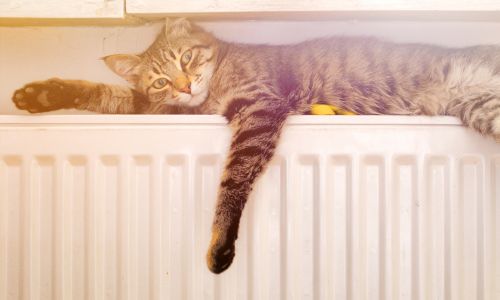
While respiratory infections are a real risk, there may also be another explanation for some of your pet's symptoms that are associated with the cold seasons. Our vets in Childs Hill explain that some home environmental factors can irritate airways and make your pet more vulnerable to infections, such as:
- Dry air from central heating drying out the airway lining
- Condensation and mould spores
- Smoke from open fires and wood burners
- Candles, aerosols and cigarette or vape fumes
- Dusty hay and bedding, and ammonia from dirty hutches or litter trays
Pets with asthma, flat-faced breeds such as pugs, French bulldogs and Persian cats, and pets with existing conditions can also be more affected by these irritants and by cold air, so it's worth monitoring them closely.
Simple steps to keep pets healthy at home
Here's what Animal Medical Centre's team suggest for minimising risk:
- Encourage your cat to stay indoors, and keep your dog well protected with coats, boots (if they'll wear them) and short outside breaks during extreme cold weather.
- Provide a warm, comfortable and draught-free space to rest.
- Avoid leaving pets alone in rooms with open flames or fuel-burning heaters, including log burners and paraffin or gas heaters.
- Open windows for a short time each day to let fresh air circulate, even when the heating is on.
- Tackle condensation and damp by wiping down windows and drying laundry away from where your pet sleeps.
- Avoid using aerosols, air fresheners or scented candles near your pet, and never smoke around them.
- Fit a carbon monoxide alarm in any room with a fire or gas appliance.
- Keep walks shorter on very cold days especially if your pet has a breathing condition, as cold air can irritate the airways.
- Make sure vaccinations are up to date - the kennel cough vaccine in dogs is important if your dog mingles with other dogs.
As pet parents we do all we can to minimise risk, however some things are out of our control - if you do have a poorly pet, we're here to help. Book a check-up with our vets in Childs Hill today.
Book an appointment