
10 Signs Your Cat Truly Loves You


Have you ever noticed your cat always seems to conveniently appear in the same room as you? Some cats may curl up on your lap, while others prefer to quietly sit nearby and keep watch from a distance. Every cat has their own unique temperament, which often leaves owners wondering: does my cat love me? Our team at Animal Medical Centre explain that cats often show affection in much subtler ways than dogs. While they are naturally more independent, many cats form strong bonds with their owners; they just tend to express it a little differently.
In the article below, we're sharing 10 signs that your cat loves you, for all the curious cat owners in Greater London.
If you'd like advice on understanding your cat's behaviour or supporting their wellbeing, book an appointment with our friendly team at Animal Medical Centre.
Get advice for your cat10 signs your cat truly loves you
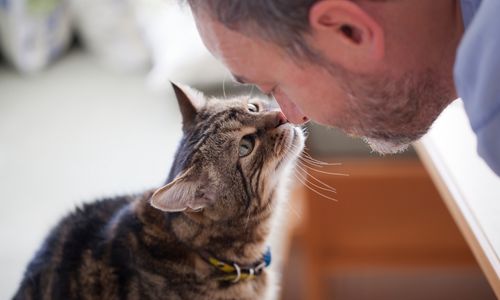
The team at Animal Medical Centre explain that cats are more emotionally intelligent than we often give them credit for. Studies have shown that cats can respond to human emotions, so the next time you wonder if your cat only sticks around for the next feeding time, think again.
Below are some ways that cats show their owners affection.
- Headbutting: When your cat rubs or butts their head against your hand or body, they are leaving their scent behind using glands around their forehead and cheeks, helping them mark you as part of their safe and familiar environment. This is a common way for cats to greet owners, seek attention and strengthen social bonds.
- Following you around: Cats are naturally curious, but if your cat regularly follows you from room to room, it can be a sign that they enjoy your company and feel secure around you. Some cats simply like being involved in whatever their owners are doing.
- Slow blinking: At Animal Medical Centre, we often describe slow blinking as a sign of trust and comfort. Cats usually only close their eyes slowly around people and animals they feel completely comfortable with.
- Making biscuits: Kneading with their paws, often called “making biscuits”, is a behaviour that starts in kittenhood while nursing. Adult cats often continue this behaviour when they feel happy, content and safe.
- Exposing their belly or butt: Our vets in Childs Hill explain that cats are naturally protective of vulnerable areas, so rolling over or presenting their backside can be a sign of trust. While not all cats enjoy belly rubs, exposing their stomach often means they feel relaxed around you.
- Purring or trilling: Purring is commonly associated with comfort and contentment, while trilling is often used as a friendly greeting. Many cats use these vocalisations to communicate affection and seek interaction with their owners.
- Sitting or sleeping on you: Cats often choose to sleep near people they trust most. Sitting on your lap or curling up beside you allows them to feel warm, safe and close to you.
- Grooming you: Licking your hair or skin may seem unusual, but grooming is a social bonding behaviour for cats. In multi-cat groups, cats groom those they feel connected to, and they may treat owners the same way.
- Bringing gifts: Whether it's a toy or something less appealing from outside, bringing “gifts” is thought to be part of your cat's natural hunting instinct. Some experts believe cats may do this to share with members of their trusted family group. Our team in Greater London often remind owners that this behaviour is instinctive rather than ‘naughty'.
- An upright tail: A tail held high when approaching you is usually a positive sign. Cats often greet people and other cats they like with an upright tail, showing confidence, friendliness and comfort.
Learning to recognise these subtle signals can help you better understand your cat and strengthen your relationship with them.
If you have questions about your cat's behaviour or wellbeing, our team at Animal Medical Centre are always happy to help. Book an appointment for tailored advice and support.
Speak to our team about your cat's behaviour